The ADHD Entryway System That Reduces Clutter & Overwhelm

This post may contain affiliate links. I may earn a small commission at no extra cost to you.

As an Associate, I earn from qualifying purchases.

Walk into your house.

Look at your hallway honestly.
Shoes kicked off by the door.
Bags dumped on chairs.
Random receipts.
Unopened post.
A coat mountain that somehow multiplies overnight.

If your entryway constantly feels chaotic no matter how many times you tidy it, you are not failing at organisation. You probably just have an ADHD brain trying to function in a space that was never designed for how your brain actually works. Home organisation should feel supportive — not stressful.

So this is your realistic, shame-free guide to creating an ADHD-friendly entryway that actually helps reduce overwhelm instead of adding to it, because the goal is not a Pinterest-perfect hallway.

The goal is a home that feels calmer the second you walk through the door.
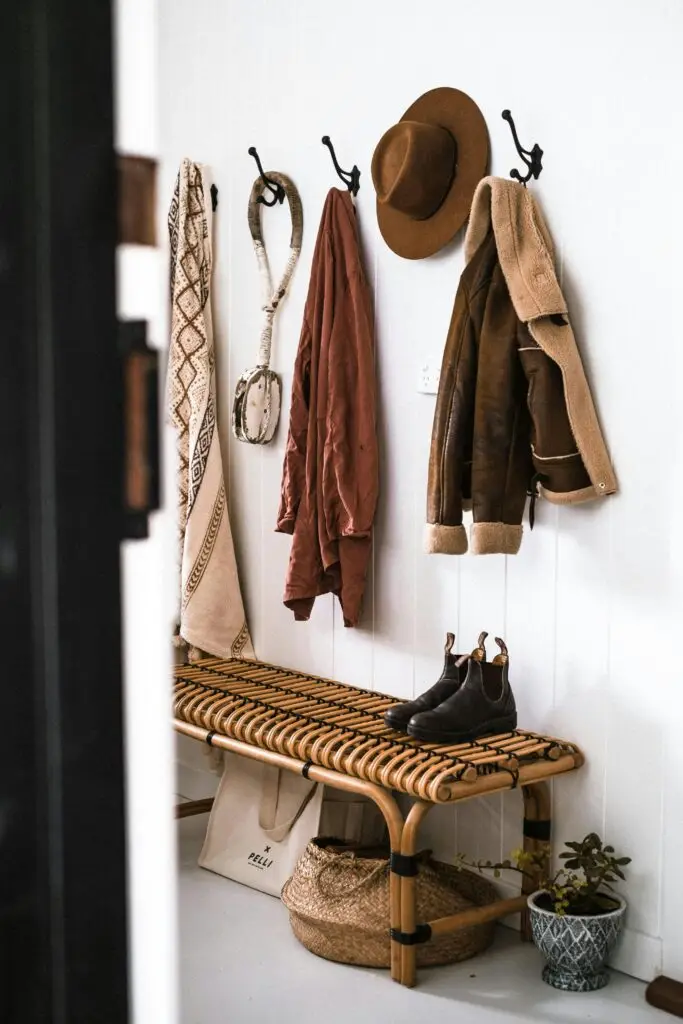
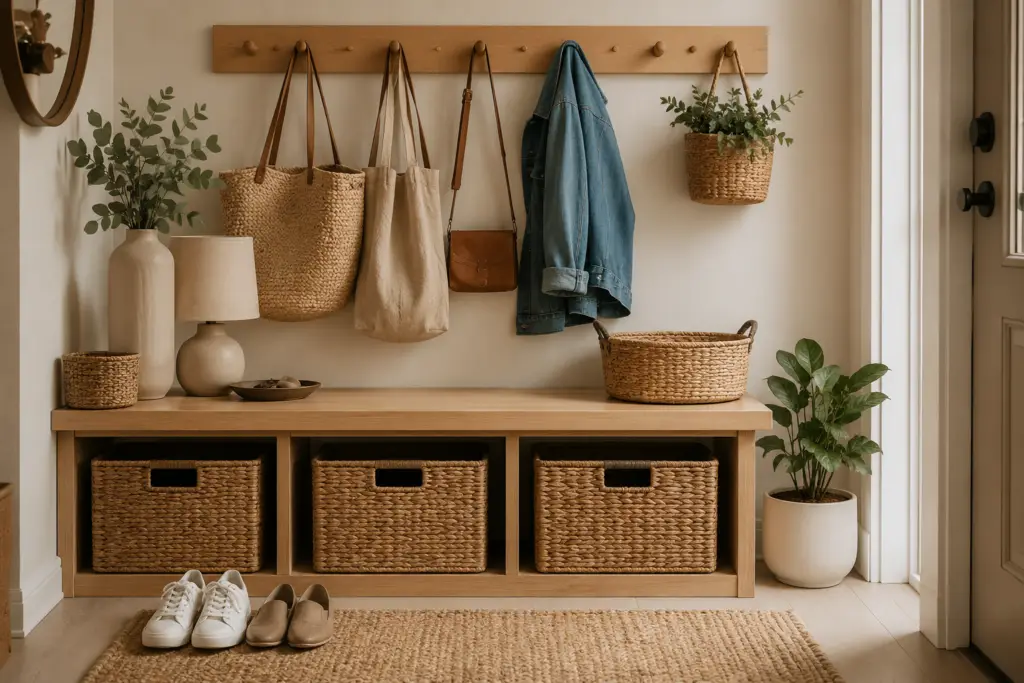
Stylish entryway decor with coats, hat, and boots on rattan bench.

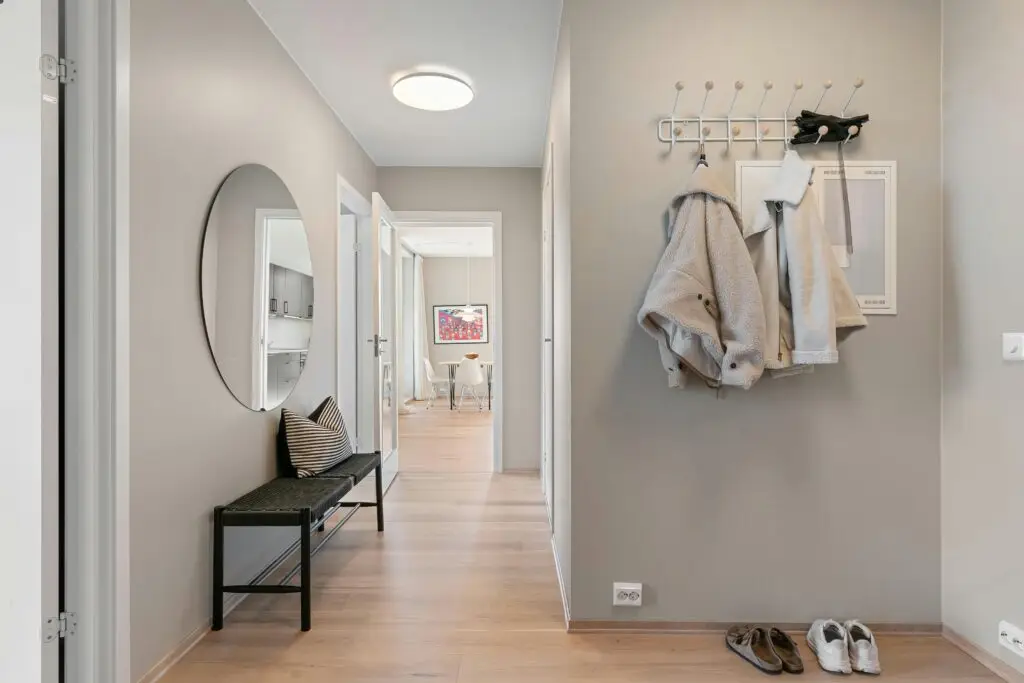
A contemporary hallway with minimalist decor featuring coats, shoes, and a stylish mirror.

Why ADHD Homes Struggle With Hallway Clutter

Entryways are one of the hardest areas for ADHD brains to manage.

Why?

Because they’re transition spaces.

And ADHD brains often struggle with transitions:

  • leaving the house
  • arriving home
  • switching tasks
  • remembering where things belong
  • completing “final steps”

That’s why hallways become dumping grounds for:

  • shoes
  • coats
  • bags
  • keys
  • unopened post
  • laundry
  • random objects you meant to deal with later

Add executive dysfunction, overwhelm, time blindness, and mental exhaustion into the mix… and clutter builds up fast.

The Biggest ADHD Organisation Mistake

Most people try to create systems based on how they wish they behaved.

But ADHD-friendly organisation works best when it matches your actual habits.

For example:

  • If you always drop your bag by the door → create a bag station there
  • If shoes pile up near the entrance → put a basket exactly there
  • If post gets ignored → create one visible “action tray”

Stop fighting your habits.

Start designing around them.

That changes everything.

The ADHD Entryway Rule: Make It EASY

If a system takes too many steps, ADHD brains usually won’t stick to it consistently.

So your hallway systems should be:

  • visible
  • simple
  • low effort
  • easy to maintain
  • forgiving on low-energy days

That means:

  • hooks instead of hangers
  • open baskets instead of lids
  • trays instead of drawers
  • labelled drop zones
  • fewer complicated systems

The easier something is to put away, the more likely your brain is to actually do it.

1. Create An ADHD “Drop Zone”

This is probably the most important ADHD hallway tip.

Instead of expecting yourself to put everything away immediately, create intentional landing spots.

Think:

  • a basket for shoes
  • hooks for coats
  • tray for keys
  • mail sorter
  • basket for random daily essentials

Drop zones work because they reduce decision fatigue.

Your brain no longer has to think:
“Where does this go?”


The answer is already waiting for you.

organised entryway

2. Stop Hiding Everything Away

Traditional organisation advice often focuses on hiding clutter.

But ADHD brains usually need visual reminders.

If things are hidden:

  • they get forgotten
  • ignored
  • repurchased
  • abandoned

Visible organisation works better for many ADHD women.

Try:

  • open shelving
  • labelled baskets
  • wall hooks
  • clear containers
  • visible shoe storage

Functional visibility beats aesthetic perfection.

3. Give Yourself Permission To Make It “Ugly Helpful”

This one matters.

Your entryway does not need to look like a designer showroom to work well.

If a giant shoe basket by the door saves your sanity…
that’s successful organisation.

If hooks everywhere help coats stop living on chairs…
that’s successful organisation too.

ADHD-friendly homes often work best when they prioritise ease over aesthetics.

And honestly? That’s nothing to feel ashamed about.

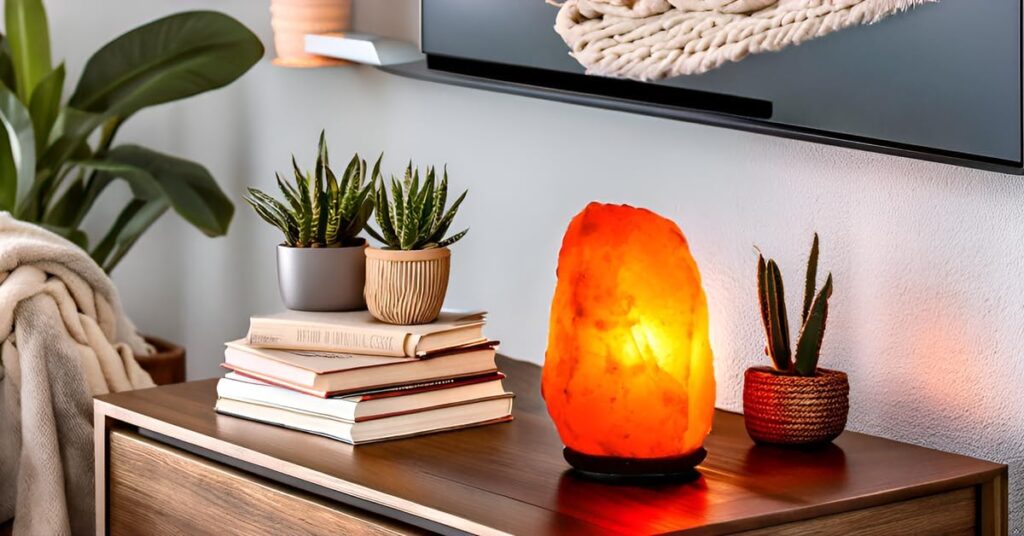
organised sideboard salt lamp

4. Reduce The “Leaving The House” Panic

ADHD mornings can feel chaotic before you’ve even left the house.

An organised entryway can massively reduce:

  • forgotten items
  • last-minute searching
  • stress
  • lateness
  • overwhelm

Create a “grab-and-go” area with:

  • keys
  • wallet
  • headphones
  • medication
  • sunglasses
  • reusable bags
  • chargers

The less your brain has to remember, the calmer mornings become.

5. Create A Tiny Evening Reset

Not a huge cleaning routine.

Just a small reset.

Try:

  • putting shoes back in baskets
  • hanging coats up
  • clearing post
  • resetting bags for tomorrow
  • putting rubbish straight in the bin

Even 5 minutes helps reduce visual overwhelm dramatically.

And ADHD brains often feel calmer in spaces that feel visually simpler.

6. Make Your Hallway Feel Warm & Welcoming

This sounds small, but it matters.

Your home should feel like relief — not another thing you’re failing at.

Tiny dopamine-friendly touches help ADHD spaces feel safer and easier to maintain.

Try:

  • warm lighting
  • cosy rugs
  • pretty baskets
  • calming colours
  • soft lamps
  • simple wall art

ADHD-friendly organisation is not just practical.


It’s emotional too.

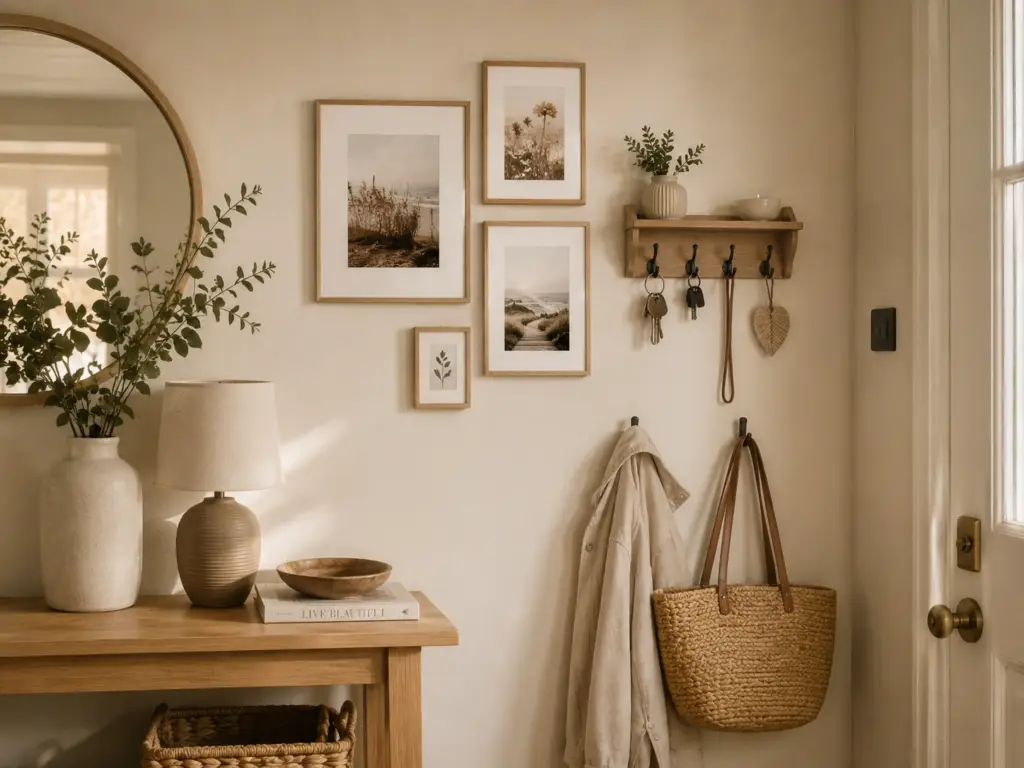
Aesthetic entryway organised drop zones

Final Thoughts: Your Home Should Support You, Not Stress You

You deserve systems that work on hard days too.

You deserve organisation that feels realistic.

And you deserve a home that feels calming the moment you walk through the door.

Even tiny hallway changes can reduce daily overwhelm more than you realise.

One hook.
One basket.
One drop zone.
One less stressful morning.

That all counts.

Always. 

Scroll to Top